

For decades, travel loyalty was built on a simple premise: stay with the same airline, hotel, or credit card long enough, and the rewards would eventually pay off. Travelers accepted that equation. Many still do. But a growing segment has stopped waiting and started optimizing.
Instead of committing to one program, they belong to several. Instead of chasing status, they are calculating redemption values, comparing booking portals, and deciding trip by trip which program delivers the best return. Loyalty has become a financial decision.
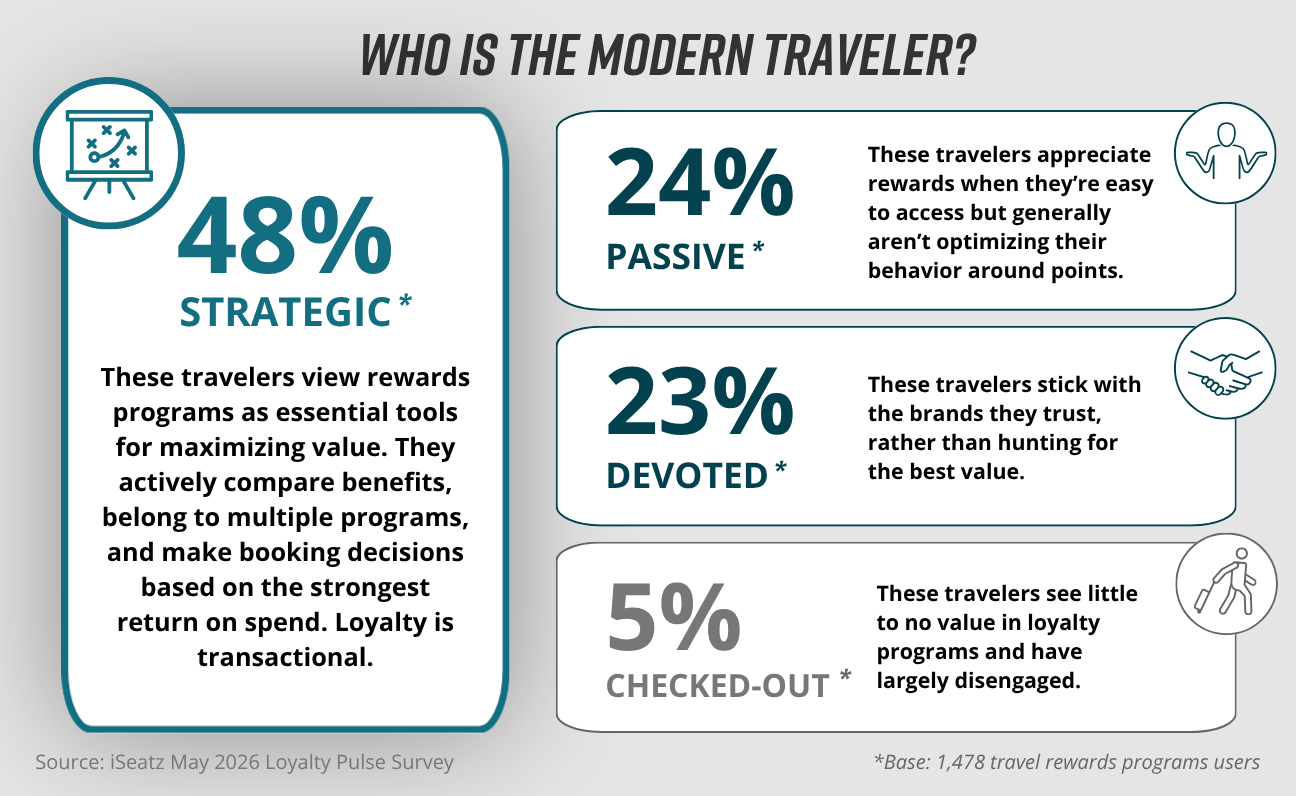
Our latest survey puts a number to that shift: 48% of travel rewards program users now identify as Strategic Travelers, making them the single largest segment in our research. Understanding who they are, what they want, and how far they will go to get it is one of the clearest opportunities for brands fighting to earn and maintain consumer loyalty right now.
Who is the Strategic Traveler?
The Strategic Traveler does not have a favorite airline the way their parents did. They have a spreadsheet, or at least a mental one. They belong to multiple programs, compare benefits across brands, and direct their spending toward whichever option delivers the greatest return for each specific trip.
They skew younger (nearly 45% of both Gen Z and Millennial travelers identify this way) and they over-index among higher-income households, with travelers earning between $150,000 and $199,999 the most likely of any income group to be strategic optimizers. They are also more likely to be parents, with 40% of single parents and 37% of partnered parents falling into this segment. This is a group in their peak earning and spending years, making high-stakes travel decisions regularly, and evaluating every program against a single question: is this worth my business?
Fifty-six percent of travel rewards users say if loyalty programs disappeared tomorrow, they would simply prioritize price and convenience. That is not a rejection of loyalty. It is a definition of it. These travelers are loyal to value, and they will stay exactly as long as the value holds.
More Traveler Styles
The Strategic Traveler does not exist in isolation. They are the largest of four distinct loyalty mindsets our research identified, but understanding the full landscape matters because each segment responds to very different things.
The Passive Participant (24%) is enrolled but not actively engaged. For them, convenience is essential. When rewards surface easily and redemption requires minimal effort, this group engages. Brands that simplify the experience have a clear path to activating a segment that is already signed up and waiting.
The Devoted Loyalist (23%) is motivated by trust rather than optimization. Thirty-three percent of travelers earning over $300,000 identify as devoted, making this a high-value segment that rewards consistency. They do not need to be convinced. They need to be reliably delivered to.
The Checked-Out Traveler (5%) has largely disengaged from loyalty programs. The opportunity here is in demonstrating immediate, tangible value rather than aspirational rewards that feel out of reach. Nearly 10% of travelers earning over $300,000 fall into this category, which signals that even high-income travelers disengage when programs do not deliver. Getting them back starts with making the value undeniable.
Each of these segments is reachable. The brands best positioned are the ones that design for the specific thing each group is looking for. For example, more intuitive redemption experiences for passive participants, a sharper definition of value for checked-out travelers, and more attainable, meaningful perks for devoted loyalists.
Loyalty is a Value Calculation
While the four personas paint a picture of a segmented loyalty landscape, there’s a pattern to pay attention to across the board: when a program earns trust, travelers respond with real behavioral commitment.
Seventy-seven percent have chosen a preferred brand over a cheaper option to earn or redeem rewards. Fifty-eight percent have paid a higher rate to stay within a preferred loyalty program. Fifty-six percent have changed destinations based on available rewards, and the same share have taken a longer route or accepted a layover to maximize points.
This is commitment, earned through demonstrated value. The Strategic Traveler will pay more, go further, and change plans for the program that consistently delivers. That level of behavioral flexibility is an extraordinary opportunity for brands that can meet it, and a signal of exactly how much is being left on the table by those that haven’t yet.
The Opportunity for Travel Brands
Across two consecutive years of research, real value, defined as consistent savings and worthwhile perks, has been named the top driver of loyalty, rising from 15% in 2025 to 23% in 2026. Status and recognition rank near the bottom at 6% both years.
Travelers are telling brands exactly what they want. Programs that make value easy to understand, easy to access, and worth coming back for are the ones that will earn the Strategic Traveler's business and keep it.
Want more news and insights from iSeatz? Sign up for our newsletter!

To learn more about our work in travel technology, contact us here.